
Addiction is a disease just like heart disease is a disease. Both these diseases are preventable. Addiction is preventable through education and lack of use. Heart disease is preventable through following a healthy diet, exercising regularly, and not smoking. And both these diseases still occur – a lot – despite their both being preventable.
So let’s take a deeper look at a person who suffers from heart disease. Since being overweight is correlated to heart disease, let’s imagine that this man is 5’11” and weighs 200 pounds. This man – let’s call him John – has been told repeatedly by his doctor that he needs to lose weight, and he tries, but he just doesn’t stick with a healthy diet. John has been told by loved ones that he needs to exercise more, and he sees that he’s not able to play with his adolescent child because of his weight. John has had a “mini” heart attack, and he’s on medication to lower his blood pressure, but he’s relatively noncompliant, forgetting to take the medication as prescribed.
Think a minute about how you feel about John and his prognosis. John’s not doing what he knows he must do to improve his well-being. He has a disease, and he’s choosing to live with the chronic, ongoing effects of it. Who’s responsible for John’s health?
If you’re like most people, you think John is. And I’d contend that you’re right.
So now let’s look at Jim. Jim has a different disease; it’s the disease of addiction. Jim knows he’s had negative consequences because of his substance use. He’s been told by loved ones that they are concerned about his use, and he’s seen that his use is negatively impacting his relationships. He’s been told by a treatment professional that addiction leads to incarceration or death and that he needs to stop using. And Jim has been prescribed medication to stop the cravings, but he’s relatively noncompliant, “forgetting” to take the medication as prescribed.
Now, think a minute about how you feel about Jim and HIS prognosis. Jim is not doing what he knows he must do to improve his well-being. He has a disease, and he’s choosing to live with the chronic, ongoing effects of it. Who’s responsible for Jim’s health?
Addiction has rates of relapse that are similar to those of other chronic diseases (NIDA), but as a society we have a very different way of looking at them. There are some who give people all the responsibility, no matter the disease. You’re sick and you want to get better, then you have to do the work. But this blog is about the others, those who want to blame the system for not helping Jim. And these people are abundant in our society.
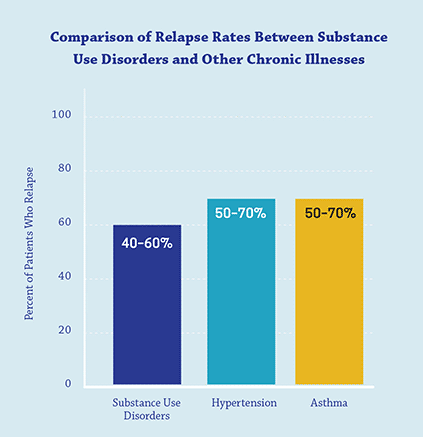
When you think about who’s responsible for Jim’s health, your answer will depend upon whether or not you KNOW and LOVE someone with the disease of addiction. If you do and you’ve pictured that person, chances are you think it’s the system’s responsibility. Poor Jim just can’t find help. He’s been to treatment several times, but “no one will help him now.” “There’s no treatment available.” “That treatment doesn’t work.”
My goodness, that list can go on and on, but disease is disease, and the only person who can commit to recovery from it is the one who is suffering from it. Exercise and a healthy diet are essentially free! You know what else is? Treatment for addiction.
Treatment IS available. Treatment DOES work. Recovery IS possible. But there’s no recovery from any chronic, progressive, lethal disease without effort on the part of the person suffering with the disease. No one is going to live his best life without work, and “the system” can’t be accountable for a person not wanting to do the work, no matter what the disease is.
That work starts with education. Step one is determining what treatment is available. Have insurance? Turn over the card, call the number, and ask for help. No insurance? Google “12-step meetings in (location).” If you’re not the person with the disease of addiction, you can’t will your loved one into better health. You can, however, take care of yourself. Step one is also education. I suggest reading Baffled by Addiction by Ed Hughes and Ronald Turner. It won’t solve your loved one’s problem, but it will help you…and sometimes that’s all we can hope for.

References
https://nida.nih.gov/publications/drugs-brains-behavior-science-addiction/treatment-recovery
 Guided by Guida
Leave a comment