
One of the conditions that Fetal Alcohol Syndrome (FAS) may be mistaken for is Williams Syndrome. In general, it looks the same, the behaviors are the same, and the outcomes are the same. However, Williams Syndrome is typically diagnosed by the time a child is 3½, and FAS is, well, typically not ever diagnosed.
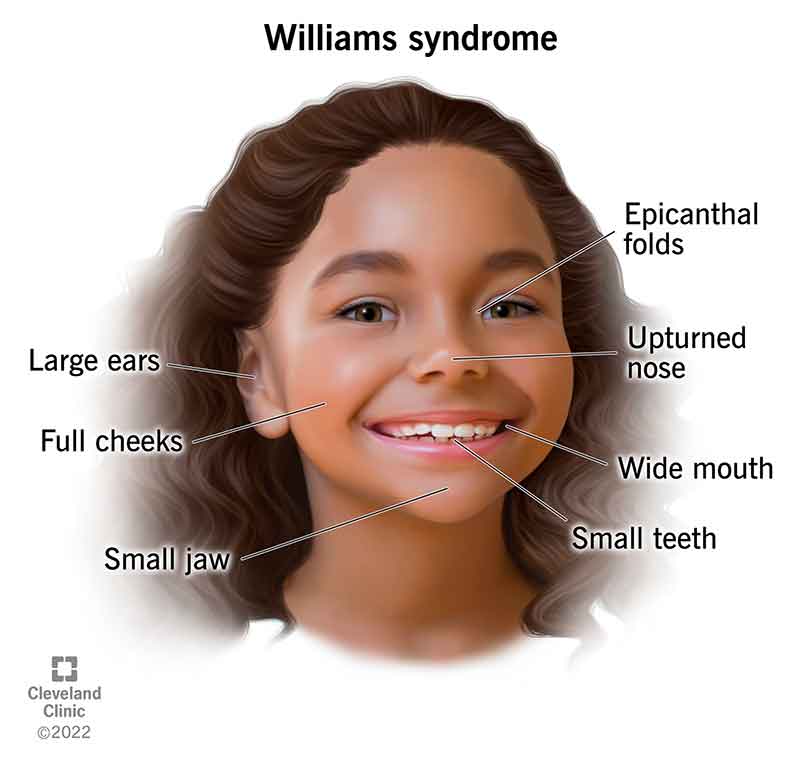
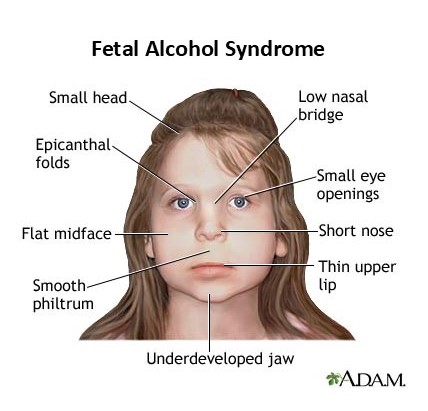
Regarding Williams Syndrome, “In most cases, doctors first consider [it] if a child has a developmental delay, teeth problems, or other symptoms around age 2. They’ll do an exam and ask for an evaluation by a genetics specialist along with genetic testing” (kidshealth). That testing will determine if there’s a missing piece of chromosome 7 in order to help diagnose Williams Syndrome.
Williams Syndrome affects 1 in 10,000 to 20,000 births in the US. FAS, on the other hand, affects about 3 in 1,000…or, for those of you who prefer percentages, .007% (point zero zero seven percent) has Williams Syndrome, whereas .3% (point three percent) of the population has FAS (childrenshospital). These stats are for Fetal Alcohol Syndrome, NOT one of the other diagnoses that falls under the umbrella of Fetal Alcohol Spectrum Disorders (FASDs). If we are to consider ALL FASDs, those numbers increase to 1 in 20 births in the US or about 5% of the population…note there’s no decimal point. It’s five percent of the population.

But there is no test to diagnose FAS or FASDs. Instead, there are, at best, misdiagnoses. As an analogy, consider that we treat the cough – misdiagnosing autism – when the person really has pneumonia – Partial Fetal Alcohol Syndrome. But, while there is currently no genetic test to indicate that a person has an FASD, there is a test…a simple one…to determine if a person was prenatally exposed to alcohol. That test doesn’t occur when the child is around 3½, though; it occurs when the child is born. And that test won’t diagnose if a child has an FASD, but it will go far in helping diagnose FAS or another FASD down the road, if necessary. That test is screening for alcohol in umbilical cord tissue (USDTL). It’s widely available, noninvasive, and economically feasible, and it would go far to help those with prenatal alcohol exposure get the services they need. Imagine how many lives would be positively impacted if we just added that one test.
References
https://www.childrenshospital.org/conditions/fetal-alcohol-syndrome-fas
https://kidshealth.org/en/parents/williams-syndrome.html
 Guided by Guida
Leave a comment