
I write a lot here about language and how words – especially those used in the field of addiction – don’t actually define what we mean to say. Words like “substance use disorder,” “mental health,” and others. Imagine how much farther ahead we’d be if we say that someone has “addiction” rather than a “substance use disorder.” Everyone could then understand that the person has the disease of addiction and know what treating that means. Instead, far too often we say things like, “Well, I’m not going to label you. I’m just going to say that you have a substance use disorder, and what you do with that information is up to you.”
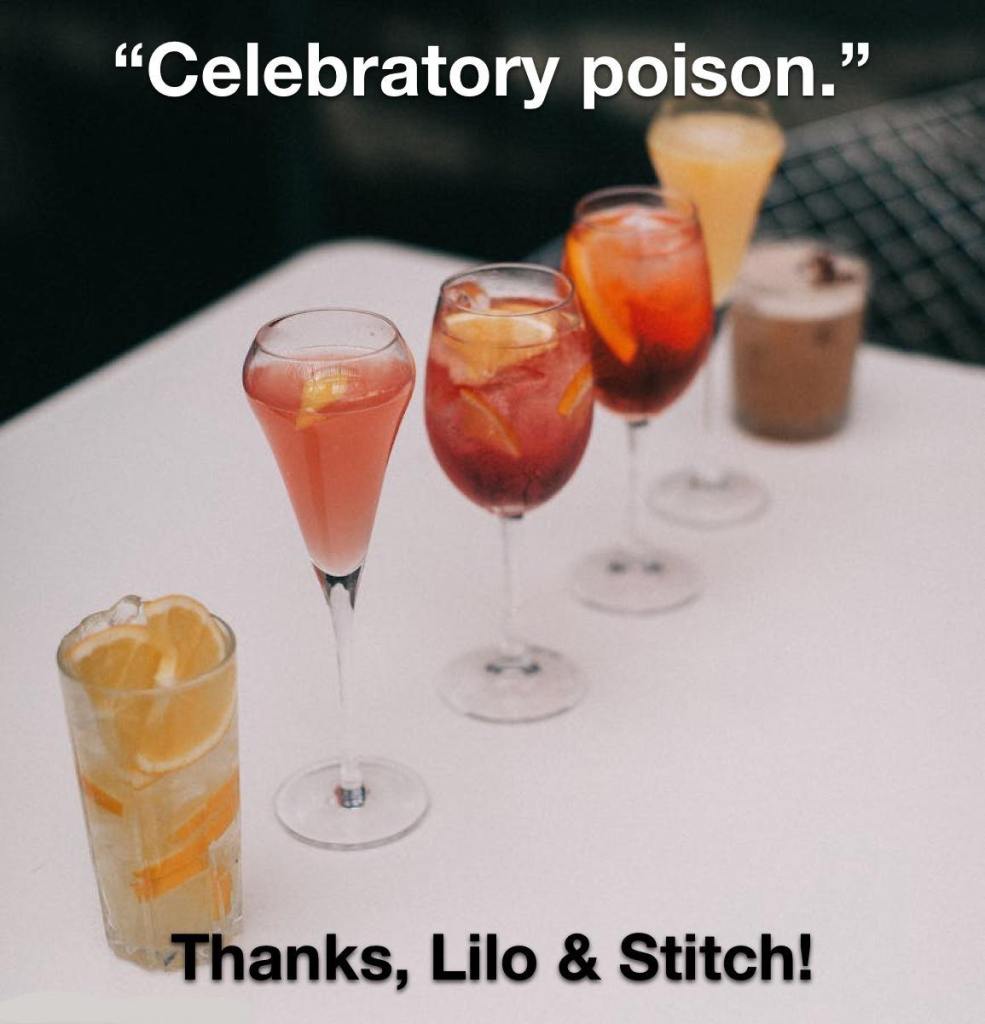
Personally, I think we’re doing people a grave disservice, so I’m going to rely on an icon to help me get the message out about alcohol. In Lilo & Stitch, the aliens use language that I think will change how we in the US embrace alcohol, if we could just realize what it is…“celebratory poison.”

Imagine if everyone knew that alcohol is, indeed, poison. It’s toxic. It causes at least seven types of cancer. It’s dangerous in anything more than one properly poured serving per day for females and two servings per day for males. If we start calling it “celebratory poison” people will understand that it’s not the panacea we pretend it is. We won’t “need” a drink after a bad day at work. The “mommy juice” jokes would disappear. No one would continue to brag about their “wooden legs.”
And, while we’re at it, what if we stopped using “harm reduction” and started calling that what it is: “death reduction”? I’ve written here about what harm reduction was intended to be from the US Government. https://guidedbyguida.guide/2023/05/17/death-by-degrees/
The three, widely-held harm reduction strategies are clean needles for injecting drugs, testing supplies for drugs, and NARCAN to reverse overdose of drugs. What happens without clean needles? People get infections and die. What happens if drugs aren’t tested and have contaminants or additives? People take them and die. What happens if there’s not NARCAN to reverse the overdose? People overdose and die. So what if we change the name from “harm reduction” to “death reduction,” thereby helping people to understand that the outcome is, indeed, death without these interventions? I contend that we’d have a more educated populace, including those who need the interventions.
Language matters. Being clear about diagnosis, treatment, and recovery matters. Can I count on your help to get the message out?
 Guided by Guida
Leave a comment