
Learning is good, but accepting all research as gospel is problematic, and the alternative — dismissing facts we don’t agree with — is equally harmful.
Despite my sister saying I’m basically a one-trick pony, I’m passionate about a lot of topics, so I love knowing stuff and sharing it. That’s why I enjoy attending conferences…because I get to learn and share new information. But there’s a downside, too. At a couple recent conferences that I attended that were specifically about research in the field of alcohol and other drugs, I’ve learned some new information that isn’t really resonating with me.
For example, one poster indicated that “prenatal alcohol exposure is the primary cause of Fetal Alcohol Spectrum Disorders.” Do you know what the only cause of FASDs is? The ONLY cause of Fetal ALCOHOL Spectrum Disorders? Take a guess. You’re right! It’s alcohol. Prenatal alcohol exposure isn’t the “primary” cause of FASDs; it’s the ONLY cause.
Another poster presenter, one who admitted to not knowing the information on the poster being presented, said the focus was on pregnancy during the third trimester because drinking then is the most dangerous time. It’s not. Here’s what the Center on Disease Control and Prevention says: “There is no safe time for alcohol use during pregnancy. Alcohol can cause problems for the baby throughout pregnancy, including before a woman knows she is pregnant. Alcohol use in the first 3 months of pregnancy can cause the baby to have abnormal facial features. Growth and central nervous system problems (for example, low birthweight, behavioral problems) can occur from alcohol use anytime during pregnancy. The baby’s brain is developing throughout pregnancy and can be affected by exposure to alcohol at any time.
“It is never too late to stop alcohol use during pregnancy. Stopping alcohol use will improve the baby’s health and well-being” (CDC). The third trimester isn’t the most dangerous time; there is NO SAFE AMOUNT and NO SAFE TIME to drink alcohol during pregnancy.
A speaker discussed the idea that heavy drinking has both negative and positive consequences. She identified a couple negative consequences, but she glossed over the positive consequences, and that left me scratching my head. Alcohol is a carcinogen that leads to seven different kinds of cancer.
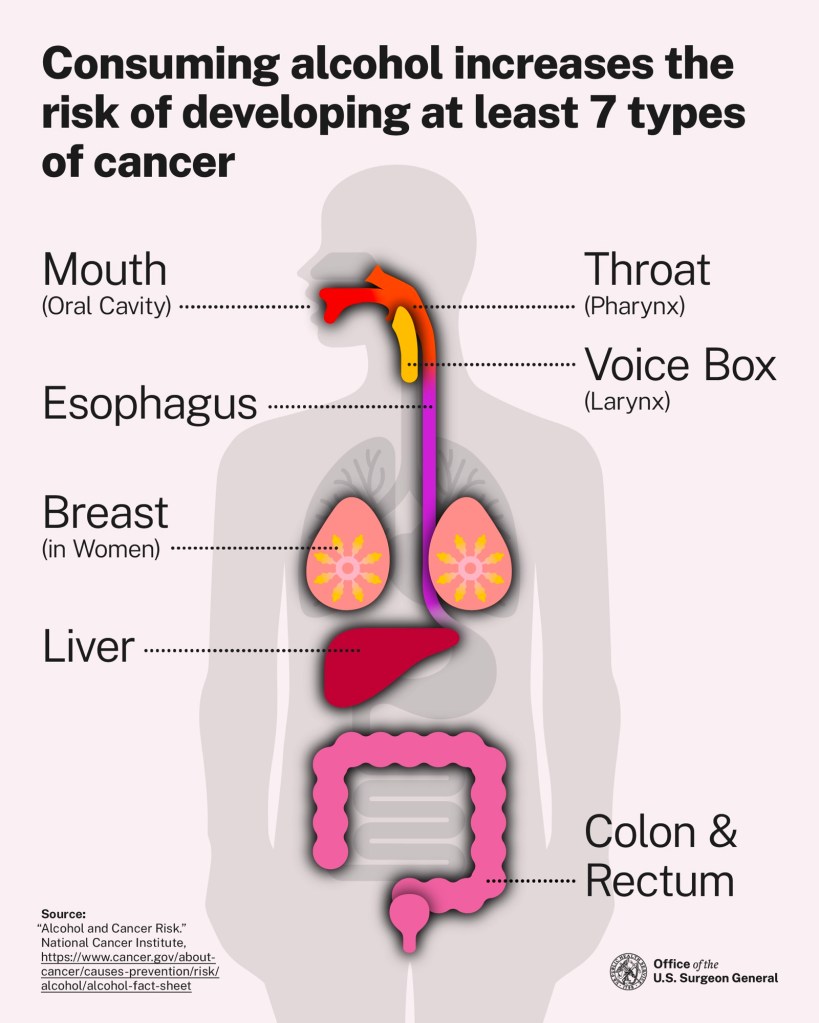
And that increase isn’t just for heavy drinkers. It’s also for those who drink less than one drink per week.

What possible POSITIVE consequences come from that? Like, is my positive consequence that I enjoy the view as my car flies over the guardrail? Sheesh. Talk about toxic optimism. There are no positive consequences of heavy drinking.
A different speaker indicated that 15 bars per 200 meters is the number that reduces assaults in bars. Ummmm, I’m from Wisconsin, the state with the fourth greatest number of bars per capita, where we’re said to have more bars than grocery stores, and even I know that 15 bars per block — which is essentially what 200 meters is — is too many!

Finally, a vendor, admittedly not a scientist but someone whose company hugely impacts the science in the field of substance use disorders, said that cannabis needs to be legalized because, since alcohol is legal, “It’s not fair.” Seriously. And this person was NOT under the age of 15. In fact, I’d guess she wasn’t under the age of 55!
I’m grateful for the opportunities to learn, but I have wondered out loud more than once if I’m just too old for science.
Alcohol is a drug. Not including it doesn’t make it less so.
Addiction is a disease. Debating that or disagreeing with it doesn’t make it less so.
I wish someone had solutions because I know I don’t, but I also know that our forever-changing language, wishy-washy definitions, and free-wheeling and anecdotal standards are not bringing us any closer to resolving substance use disorders.
References
About Alcohol Use During Pregnancy | Alcohol and Pregnancy | CDC
Which States Have the Most Bars? [MAP] | VinePair
 Guided by Guida
Leave a comment