
Holders of Commercial Driver’s Licenses (CDLs) are arguably the most important drivers on our roads. They are the ones who help us get any item we want, short of raising it ourselves, and they are the ones driving the largest and therefore the most dangerous vehicles on our roadways.
You may be surprised by the requirements for alcohol and other drug testing for CDL holders. I know I was.
First, employers must have a written policy that’s provided to every driver annually, and they must make educational materials available as well to all drivers. They must test the driver if there is reasonable suspicion that ze is under the influence, meaning that the driver has been observed by a supervisor, and the supervisor has seen changes in appearance, behavior, speech, or body odor that suggest the driver is under the influence of a substance.
Annually, employers must randomly test at federal rates the holders of CDLs who are employed by them. That is, 50% of the CDL holders must be tested for drugs other than alcohol, and 10% of the CDL holders must be tested for alcohol. Oh, and urine is fine to test. Employers are also required to check the FMCSA Drug and Alcohol Clearinghouse database for hiring and annually employing drivers.
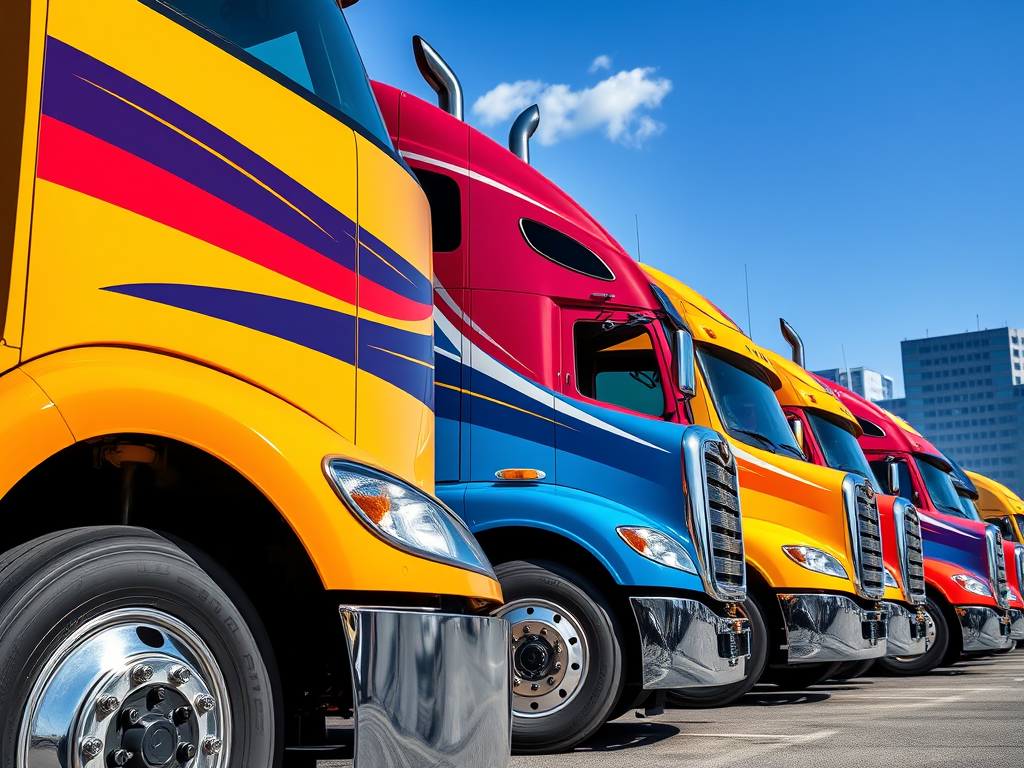
And supervisors of CDL holders must complete a one-time, two-hour training on alcohol and other drugs so that they can appropriately test for reasonable suspicion. The requirement for this one-time training is sixty minutes on signs and symptoms of alcohol misuse and sixty minutes on signs and symptoms of other drug misuse. Okay…not much time, but it’s something!
I was excited to find out that these requirements are in place, because, given how dangerous those trucks are on the road, every little bit of prevention helps! But then I started thinking about the numbers…and the tests.
There are over 5.5 million CDL holders or learners, not counting the nearly 232k owner/operators, and in 2024, 47,957 violations of alcohol and other drug programs – in the entire nation – were reported to the clearinghouse. Of those, 46,668 were violations for drugs other than alcohol, and a whopping 1,286 were violations for alcohol. In 2024, 14,536 of the tests were random for drugs other than alcohol, and 532 were random to test for alcohol in the entire nation. So of all the CDL holders or learners in the entire nation, less than 1% had a violation. Who really believes that?
What to make of this…
The training of supervisors seems like a good place to start, but I wonder if the supervisors are receiving ENOUGH training or if they are using the training properly.
And, come on…urine cups? Still? The 5-panel urine test is used, meaning that the only drugs tested for are cannabis, cocaine, amphetamines, opioids, and PCP. But there are so many other drugs out there!
And yet, the number one drug that is misused, still, as always, is alcohol, but the rules are that 50% of drivers must be randomly tested for the big five drugs, and that’s using a test that is unlikely to be accurate after any more than 72 hours. Only 10% of the drivers are tested for the most abused drug of alcohol, and the tests used can be breath or saliva, meaning that a test would be positive only within hours of consumption.
There are better tests out there…nails, for example…and there are better trainings for supervisors. But, I get it: we all want our stuff…but at what cost?
References
https://www.ecfr.gov/current/title-49/subtitle-B/chapter-III/subchapter-B/part-382
https://www.transportation.gov/odapc/DOT_5_Panel_Notice_2018
 Guided by Guida
Leave a comment