
Prenatal Fentanyl Exposure is the latest in the list of drugs, including alcohol, of course, causing abnormalities among newborns. We first heard about Fetal Fentanyl Syndrome in 2023 (Science). In contrast, we first heard about Fetal Alcohol Syndrome (FAS) in 1973, but later we learned about Fetal Alcohol Spectrum Disorders that don’t have the sentient facial features of FAS; we first heard about Fetal Nicotine Syndrome in 2010 (PMC NIH); and we first heard about Fetal Cannabinoid Syndrome in 2011 (PMC NIH).
Basically, it’s not looking good for babies.
Fetal Fentanyl Syndrome identified in the first study in 2023 identified 10 infants “born after pregnancies complicated by multiple drug exposures including fentanyl. The infants had relatively low growth parameters and shared feeding difficulties, distinctive facial features, and physical findings, including single palmar crease and adducted thumb and 2,3 toe syndactyly. Cleft palate (5/6), genital anomalies (4/5 males), and foot position abnormalities (talipes equinovarus in 3 and rocker bottom anomaly in 2) were common. A hypoplastic corpus callosum with diffuse thinning was seen in 3 of 5 who had a brain magnetic resonance imaging study. A clinical suspicion for SLOS led to biochemical testing. Elevated 7-dehydrocholesterol (7-DHC) or 8-dehydrocholesterol (8-DHC) was present shortly after delivery, values normalized subsequently or were normal when testing was performed at age 2.5 months as in individual 1. Chromosome microarray and exome analysis were non-diagnostic” (Science). The study is fascinating, but it’s over my head!
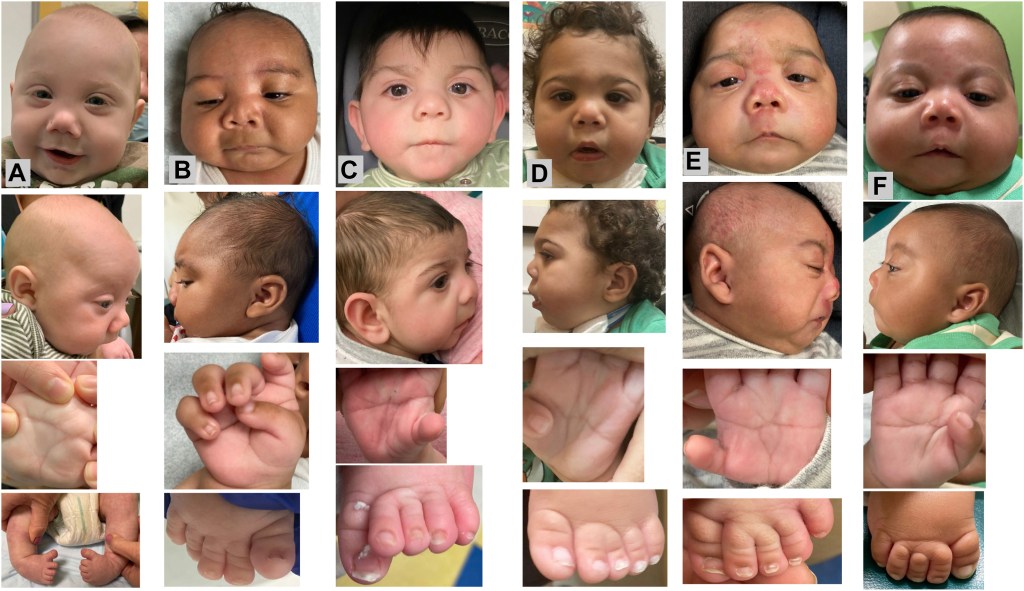
The next study – again, fascinating – identified 23 babies with Fetal Fentanyl Syndrome, and many of the anomalies were the same, but here are some vital takeaways from this study:
First, “Fentanyl exposure was considered confirmed when biological mother admitted to the exposure or when there was a positive toxicology screen for fentanyl” (gimopen).
Does anyone want to venture a guess as to how many babies were missed because the biological mother simply denied exposure, and then a toxicology screen for fentanyl wasn’t done? Knowing what I do about testing, I’m thinking it’s a substantial number.
Next, these 23 babies were “examined between a few days of life and 38 months” (gimopen). That means that, despite everything we know to be true about the importance of early intervention, some of them waited over THREE YEARS to get an appropriate diagnosis and therefore appropriate care.
Think about the most common abnormalities you’re familiar with that babies are born with:
Down Syndrome affects 1 in 700 in the US.
Cleft palate affects 1 in 600 in the US.
Heart defects affect 1 in 100 in the US.
And FASDs affect 1 in 20 in the US.
There aren’t good numbers about Fetal Fentanyl Syndrome, Fetal Cannabinoid Syndrome, or Fetal Nicotine Syndrome yet, and isn’t that scary? How long will we have to wait before we understand how many neonates are being affected? I mean, it’s over 50 years since Fetal Alcohol Syndrome was identified, and those numbers aren’t coming down. Worse, most people aren’t even talking about them!
We know there are ways to mitigate negative birth outcomes, and the one that’s pretty intuitive is to refrain from using non-prescribed mood-altering substances while pregnant. Just like we know that, in order to have best outcomes for babies, pregnant women should not eat sushi or processed meats or raw eggs, we also know that fetuses grow best in environments where illicit drugs and/or alcohol is not present. But sometimes, that just doesn’t happen. And I’m not here to blame pregnant women who have the disease of addiction. I’m here to break the stigma about them.
Babies and their mothers deserve the best care possible, and that means early identification that would lead to early intervention for both of them: universal umbilical cord tissue testing, that is, testing every single newborn’s umbilical cord tissue for drugs of abuse, including alcohol. This can be done for less than the cost of a nice pair of shoes, removing the stigma from testing, and allowing for early diagnosis, treatment, and a better life for all.
References
https://my.clevelandclinic.org/health/diseases/15677-fetal-alcohol-syndrome (If you check this, you’ll note that their website is wrong as of the 2/16/2022 update: “Using the information that is available, the Centers for Disease Control (CDC) and other scientists estimate less than 2 cases of FASD (sic) in every 1,000 live births in the United States. When researchers look at the whole spectrum of disorders (FASD), the frequency may be as high as 1 to 5 out of every 100 kids in the U.S. and Western Europe.” The first mention of FASD is meant to be FAS, Fetal Alcohol Syndrome.)
https://www.gimopen.org/article/S2949-7744(25)00220-1/fulltext
https://pmc.ncbi.nlm.nih.gov/articles/PMC2905398/ (nicotine)
https://pmc.ncbi.nlm.nih.gov/articles/PMC3252200/ (cannibinoids)


 Guided by Guida
Leave a reply to Joe Jones Cancel reply